Inquiry
Form loading...

China Best Trash Incinerators for Global Buyers?

Choosing the China Best Trash Incinerators for Global Buyers? requires more than comparing prices and glossy brochures. Buyers need evidence from real operating sites, verified technical data, and clear after-sales commitments. A suitable system should match waste composition, daily capacity, moisture levels, and local environmental requirements. Food waste, packaging, and clinical waste behave differently inside a furnace. One design cannot solve every problem.

Experienced suppliers usually explain combustion temperature, residence time, flue-gas treatment, ash handling, and energy recovery in practical terms. They should also provide installation records, maintenance schedules, operator training, and customer references from comparable climates. Ask to inspect monitoring reports, not only promotional videos. Small details matter. Door seals, refractory lining, fan quality, and spare-part availability can influence long-term reliability.

Trash Incinerators may reduce waste volume significantly, but they are not maintenance-free machines. Emission control requires continuous attention, calibrated instruments, and responsible operating procedures. Buyers should review applicable standards with qualified local engineers before signing a contract. Supplier claims still need independent verification.

A careful evaluation also considers total ownership cost. Purchase price is only one part. Fuel consumption, electricity demand, labor, ash disposal, transport, and downtime can change the final result. Some proposals look efficient on paper. Reality can be less tidy. That is why a transparent factory audit, performance test, and detailed warranty deserve as much attention as the equipment itself. This guide examines key selection criteria, supplier capabilities, technical risks, and practical questions for global buyers seeking dependable Chinese waste-treatment solutions.
China Best Trash Incinerators for Global Buyers?

What Defines a High-Quality Trash Incinerator?

China Best Trash Incinerators for Global Buyers?

A high-quality trash incinerator begins with accurate waste analysis. It must match the waste type, moisture level, heating value, and daily capacity. Mixed municipal waste behaves differently from medical or industrial waste. A reliable supplier should provide test data, operating limits, and clear maintenance requirements.

Combustion stability matters more than impressive brochure numbers. A well-designed chamber keeps suitable temperature and residence time, reducing incomplete burning. Automatic feeding can improve consistency, but only when sensors respond quickly. I would inspect temperature records, oxygen readings, and emergency shutdown functions.

Small details matter. Door seals, refractory linings, and ash removal systems face severe daily stress. Poor materials may create expensive failures after months of use.

Air pollution control is another defining factor. A complete system may include dust removal, acid-gas treatment, and continuous emissions monitoring. Buyers should request independent test reports against applicable local standards.

Factory acceptance testing is useful, but field performance can differ. That gap deserves honest discussion. Operators also need practical training, spare parts, and remote technical support.

No incinerator is maintenance-free. In real facilities, overloaded feeding and delayed cleaning often reduce efficiency. A trustworthy supplier explains these weaknesses instead of hiding them.

Waste facilities should review total operating costs, not only the purchase price. Reliability is built through measurable performance, careful installation, and disciplined operation.

How China’s Incinerator Industry Serves Global Buyers

China’s incinerator industry serves global buyers through engineering, manufacturing, and export support. Suppliers often provide municipal waste, medical waste, or industrial waste systems. Each application requires different furnace designs, feeding systems, and pollution-control equipment.

Global buyers usually need more than a machine. They need waste analysis, capacity planning, installation guidance, operator training, and spare-parts support. A reliable supplier should explain moisture content, heat value, ash production, and expected operating costs. Emission-control performance also requires verified data, not attractive promises. Local regulations remain decisive. Equipment accepted in one country may need redesign elsewhere. This detail is sometimes underestimated.

Tips: Request a complete technical proposal. Check reference projects with similar waste conditions. Ask for test records, maintenance schedules, and control-system details. Confirm who handles commissioning and after-sales communication. A video call cannot replace a site inspection. Independent testing is worth considering.

Price matters, but it should not lead the decision. A cheaper system may use simpler controls or weaker materials. Those savings can disappear during frequent maintenance. China’s manufacturing depth can support customization, yet customization adds time and technical risk. Buyers should compare lifecycle value, not only the quotation. Some project assumptions will be wrong. Review them openly before signing.

Main Types of Chinese Trash Incinerators

Chinese suppliers commonly provide three main incinerator designs for global buyers: moving grate, fluidized bed, and rotary kiln systems.

Moving grate furnaces handle mixed municipal waste effectively. Their stepped grates slowly move waste through drying, ignition, and burnout zones. This design tolerates uneven moisture and feed sizes. It needs reliable grate cooling and regular ash removal.

Fluidized bed incinerators use sand or similar media. Strong air movement suspends smaller, prepared waste particles. They can achieve stable combustion with relatively uniform fuel. However, sorting and size reduction add equipment and operating costs.

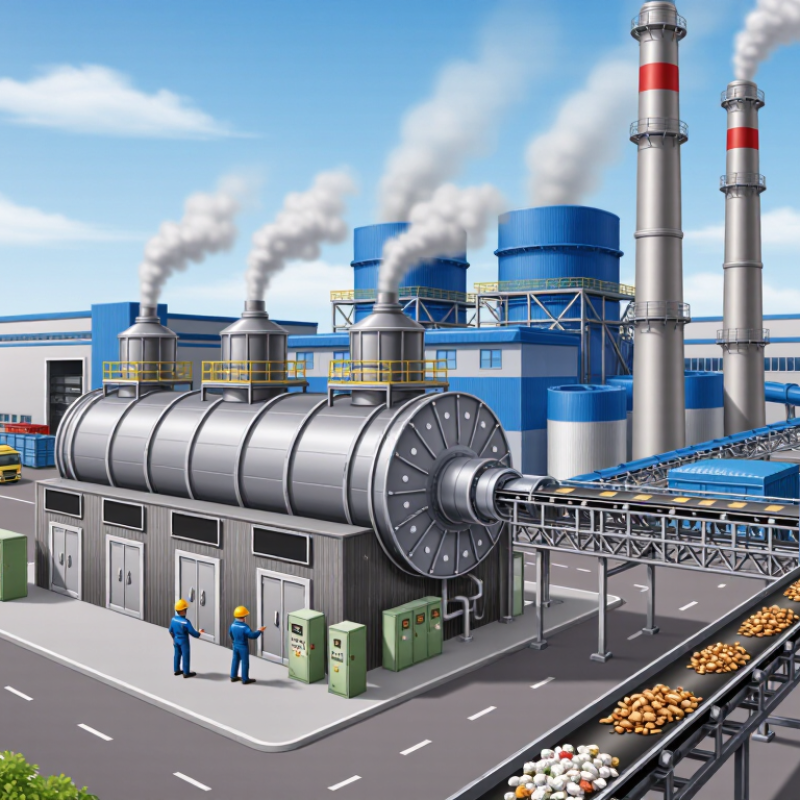
Rotary kiln systems use a slowly turning chamber. They suit varied waste streams, especially when feed composition changes. A secondary combustion chamber helps burn remaining gases.

In practice, insulation quality affects fuel use and chamber temperature. I would inspect temperature records, emission controls, and ash testing before purchasing. A low price can hide weak automation or expensive maintenance.

It is easy to overlook local permitting requirements. Chinese equipment can be well engineered, but specifications still need independent verification.

Ask for test data, service procedures, spare-part lists, and operator training details. Some proposals sound complete. They may not be.

Key Technologies, Features, and Performance Indicators

China’s waste incinerators attract global buyers because municipal waste volumes are rising quickly. The World Bank’s What a Waste 2.0 estimated 2.01 billion tonnes of municipal waste in 2016, potentially reaching 3.40 billion tonnes by 2050. Buyers should examine engineering evidence, not catalogue images.

Modern systems usually combine a moving grate, controlled combustion, waste heat boilers, and turbine generators. Stable furnace temperature matters. It reduces carbon monoxide and unburned carbon. Key specifications include daily capacity, waste lower heating value, steam pressure, electrical efficiency, and annual availability. A practical review should check performance across wet waste, seasonal changes, and sudden load variation. Real waste is rarely consistent.

Flue-gas treatment normally includes selective non-catalytic reduction, dry or semi-dry scrubbing, activated carbon injection, and bag filters. The European Commission’s 2019 Waste Incineration Best Available Techniques document provides demanding reference ranges for dust, nitrogen oxides, hydrogen chloride, mercury, and dioxins. Buyers should request continuous emissions data, laboratory records, and calibration certificates.

Bottom-ash quality also deserves attention, including loss on ignition, moisture, and metal recovery rates. The International Energy Agency notes that energy recovery depends heavily on waste composition and plant operation. This is often underestimated. A quoted efficiency figure may reflect ideal conditions rather than a full operating year. Independent acceptance testing, operator training, spare-parts planning, and transparent after-sales support can reveal weaknesses before shipment.

How to Evaluate Suppliers, Compliance, and Total Cost

Choosing a suitable waste incinerator begins with supplier evidence, not attractive brochures. Request factory photographs, production records, operator references, and recent performance data. A serious supplier should explain furnace temperature, residence time, flue-gas treatment, and ash handling in plain language. Ask for an independent factory audit.

Compliance must match the destination country, not only the manufacturing location. Check permits, emission limits, safety requirements, electrical standards, and waste classification rules with a local consultant. Request certified test reports for dust, nitrogen oxides, acidic gases, heavy metals, and dioxins. Paperwork can look complete while field performance remains uncertain. Witness a factory acceptance test, but remember that a controlled test is not a full operating year.

Total cost needs a wider calculator. Include ocean freight, customs, civil works, cranes, insulation, installation, training, spare parts, ash disposal, maintenance, and energy use. A cheaper furnace may require more refractory repairs or longer shutdowns. Ask for a five-year cost model with assumptions shown line by line. Compare guaranteed capacity under the actual moisture content of local waste. That detail matters. Also examine response times for emergency support and critical parts. A supplier may promise rapid service, yet distance, language, and time zones can slow decisions. Leave room for uncertainty. Real waste changes daily.