Inquiry
Form loading...

China Top Rubber Recycle Manufacturers for Global Buyers

China has become a major sourcing destination for global buyers seeking reliable Rubber Recycle manufacturers. Its industrial clusters combine tire processing, rubber compounding, equipment production, and export logistics. This concentration can shorten supply chains and improve access to customized materials.

Dr. Sadhan K. De, a respected rubber technology researcher, once stated, “Recycling rubber is a materials-engineering challenge, not simply a waste-management task.” That view matters when buyers evaluate reclaimed rubber, crumb rubber, devulcanized rubber, or recycled rubber sheets. Each product requires different testing, machinery, and quality controls.

A credible manufacturer should explain its feedstock clearly. Is it using passenger-car tires, truck tires, or factory scrap? Buyers should also request test data for ash content, tensile strength, particle size, odor, and moisture. A sample may look consistent under warehouse lights, yet perform differently inside a molded product.

Factory experience remains important. Look for visible sorting areas, covered storage, calibrated testing instruments, and documented batch records. Ask how the supplier handles variation between production lots. The answer may reveal more than a polished catalog.

Certification helps, but it does not replace technical verification. Environmental claims also need evidence, including energy records, dust-control measures, and responsible residue handling. Some manufacturers are highly capable. Others still need stronger documentation and process discipline.

This guide examines China’s leading Rubber Recycle manufacturers for global buyers. It focuses on practical reliability, product suitability, communication, and long-term supply potential. The market is promising, but careful evaluation remains essential. Small details matter.
China Top Rubber Recycle Manufacturers for Global Buyers

What Products Do Chinese Rubber Recycling Manufacturers Produce?

Chinese rubber recycling manufacturers produce several material grades for global buyers. Their core product is recycled rubber granules, made from cleaned end-of-life tires. Particle sizes commonly range from fine powder to coarse chips. These grades serve playground surfacing, athletic tracks, flooring, and molded components. Color, odor, and moisture levels matter in real purchasing decisions. A reliable factory should explain its sorting, magnetic separation, and screening methods clearly.

Many producers also make reclaimed rubber sheets, rolls, and baled compounds. These materials can enter mats, seals, belts, footwear soles, and industrial parts. Devulcanized rubber is another option. Controlled heat, pressure, and chemical treatment soften old rubber for new mixing. Technical suppliers normally provide test data for ash, tensile strength, elongation, and metal content. Sample approval remains essential. Laboratory figures cannot replace production trials.

Some factories recover steel wire and textile fiber as separate outputs. Steel may support metal recycling, while cleaned fiber can serve lower-demand applications. Product consistency is not perfect across every shipment. Feedstock age, tire composition, and processing settings create variation. That weakness deserves honest discussion. Buyers should request batch records, safety documents, packaging photographs, and independent test reports. In my experience, clear communication prevents more problems than attractive catalog language.
How Is China’s Rubber Recycling Industry Structured?

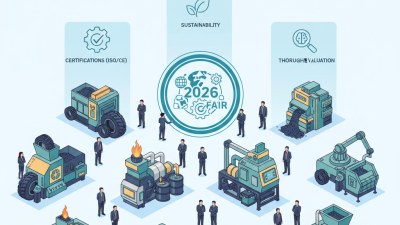
China’s rubber recycling industry is organized as a connected supply chain. Tire retailers, repair shops, fleet operators, and collection companies gather used tires and rubber products. Regional sorting centers then separate passenger tires, truck tires, industrial belts, and rubber sheets.

Specialized processors handle different material streams. Some plants produce rubber granules through shredding, magnetic separation, and fiber removal. Others use devulcanization or controlled thermal processing to recover usable materials. The output may serve flooring, road materials, molded products, or industrial components. Quality depends heavily on feedstock cleanliness and process control.

Equipment manufacturers, testing laboratories, logistics providers, and downstream buyers support this structure. Experienced buyers usually inspect production lines, storage areas, dust-control systems, and batch records. They also request tests for particle size, metal content, moisture, and polymer consistency. These details often reveal more than a polished factory tour.

The network is efficient, but not perfectly uniform. Documentation may be strong at larger facilities and incomplete at smaller ones. That gap deserves attention. A reliable supplier should explain collection sources, processing steps, inspection methods, and rejected-material handling without vague promises. Sample testing remains essential, because two batches with similar color can perform differently in real applications.

How Is China’s Rubber Recycling Industry Structured?

China’s waste-tire recycling system is organized around several processing routes. Crumb rubber and reclaimed rubber are the main material-recovery channels, while pyrolysis converts waste tires into recovered carbon black, oil, gas and steel. Retreading extends tire life before final material recovery.

Data shown are rounded industry estimates for the typical treatment mix in China and are intended to describe the sector structure rather than individual companies or brands.

Which Standards Define Recycled Rubber Product Quality?

For global buyers, recycled rubber quality is defined by measurable standards, not a dark, uniform appearance. EN 14243-1:2019 classifies materials recovered from end-of-life tyres by size, shape, and impurities. ASTM D5603 covers recycled rubber classification, while ASTM D5644 measures particle-size distribution. These tests expose hidden variation. A batch labeled “1–3 mm” should control oversize particles and fines, not just present a convincing product photo. Buyers should request laboratory results for steel, textile, moisture, ash, and volatile matter. They should also verify sampling methods. A perfect report from a poor sample proves little.

Application standards matter equally. EN 1177 evaluates impact attenuation for playground surfaces through critical fall height testing. For molded products, tensile strength, elongation, abrasion, and odor require relevant ISO or ASTM methods. The correct test depends on the final use. There is no universal premium grade. The European Tyre and Rubber Manufacturers’ Association reported about 3.6 million tonnes of end-of-life tyres arising annually in Europe in its 2023 statistics. That volume makes traceability important. Ask for source records, production dates, batch numbers, and restricted-substance declarations. Independent testing adds confidence, especially through an ISO/IEC 17025-accredited laboratory. Still, standards cannot remove every risk. Weathering and binder compatibility may change performance after delivery. Some specifications remain too general. Touch the material, sieve a retained sample, and compare it with the agreed tolerance.

Profiles of China’s Leading Rubber Recycling Manufacturers

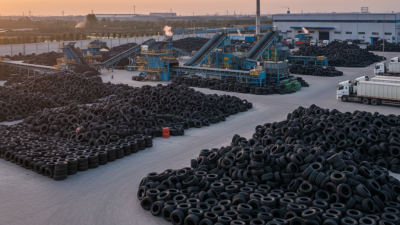
China’s leading rubber recycling manufacturers serve different points in the recovery chain. Some operate high-capacity tire shredding lines, while others specialize in reclaimed rubber and fine crumb production. The China Rubber Industry Association estimates that China generates more than 13 million tonnes of waste tires annually. That volume creates strong demand for stable processing systems.

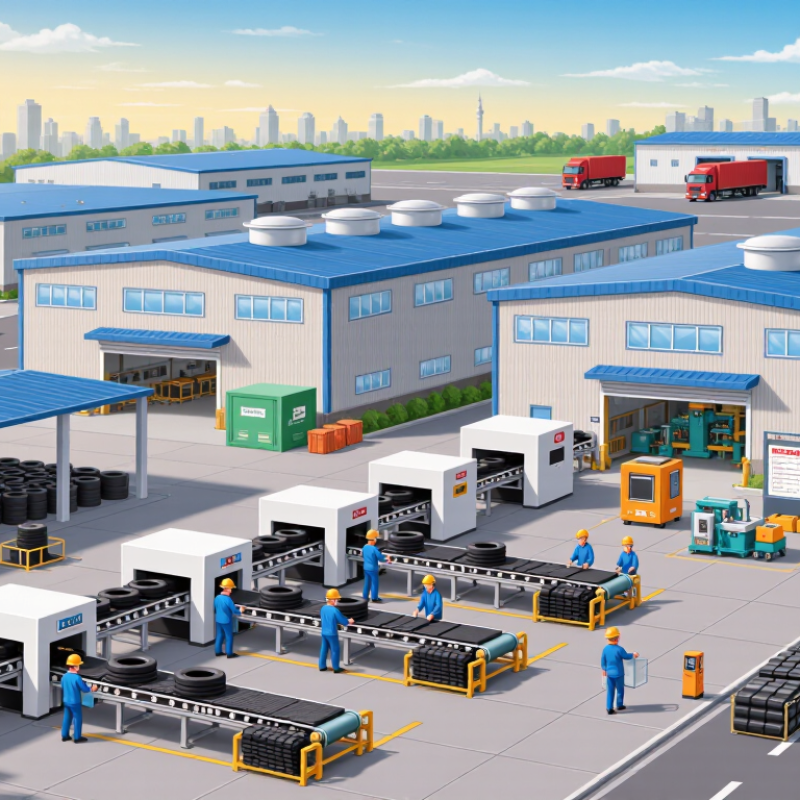
One manufacturer profile centers on automated shredding and magnetic separation. These facilities produce tire chips, steel-free rubber, and textile-separated material. Equipment typically includes low-speed primary shredders, granulators, screens, and dust-control units. Another profile focuses on devulcanization. Its factories use controlled heat, pressure, and shear to soften rubber for blending into new compounds. The process requires careful testing. Reclaimed rubber can vary between batches.

The China Tire Retreading and Recycling Association reports that recycling quality depends heavily on collection, storage, and contamination control. This point is often underestimated. Leading producers usually provide laboratory testing for ash content, tensile strength, moisture, and particle size. The Global Tire Report also identifies traceability as a growing requirement for international buyers.

In practice, buyers should inspect production records, sample consistency, worker safety systems, and export documentation. Factory visits reveal details that brochures may hide. Some suppliers still rely too much on manual sorting. That weakness deserves honest review.

How Can Global Buyers Evaluate and Source from China?

China Top Rubber Recycle Manufacturers for Global Buyers

How Can Global Buyers Evaluate and Source from China?

Global buyers should evaluate recycled rubber suppliers through evidence, not polished catalogs. Request company registration details, factory photographs, production capacity, and recent test reports. A serious supplier should explain its feedstock, sorting process, grinding method, and contamination controls in clear language.

Ask for samples from the same production line used for bulk orders. Check particle size, moisture, steel content, textile residue, odor, and visible impurities. For rubber granules or reclaimed rubber, compare tensile strength, density, ash content, and processing behavior with your technical requirements. Independent laboratory testing can reveal differences hidden by a small showroom sample.

Audit the factory remotely or in person. Observe storage areas, weighing procedures, dust control, and batch labeling. Confirm whether quality records are retained and whether corrective actions are documented. Export packaging also matters: inspect pallet stability, inner liners, moisture protection, and container loading photos.

Use a written specification and a small trial order before long-term purchasing. Include tolerances, inspection rules, delivery terms, payment stages, and remedies for nonconforming goods. Verify environmental and product requirements in the destination market, such as applicable chemical restrictions and waste-handling obligations. Do not rely on certificates alone; check their issuer, validity, and matching company information. Some buyers, including experienced ones, overlook seasonal variation in feedstock. That mistake can affect color, odor, and performance. Leave room for retesting. Supplier communication may also expose risks when technical answers remain vague or change between departments.

China Top Rubber Recycle Manufacturers for Global Buyers - How Can Global Buyers Evaluate and Source from China?

Practical evaluation and sourcing data matrix for recycled rubber suppliers in China
Evaluation Dimension Relevant Data or Typical Benchmark Documents or Test Evidence to Request Recommended Buyer Verification Method
Feedstock Type Common feedstocks include end-of-life passenger-car tires, truck tires, natural-rubber products, SBR products, and EPDM products. Feedstock composition directly affects polymer content, ash, carbon black, and process oil requirements. Feedstock declaration, incoming-material inspection procedure, product technical data sheet, and batch traceability record. Approve the feedstock source before ordering and require the supplier to identify whether passenger-car and truck-tire materials are blended.
Product Form Typical commercial forms are rubber granules, crumb rubber, rubber powder, and reclaimed rubber sheets or slabs. Particle-size specifications must be agreed by sieve analysis rather than by product name alone. Particle-size distribution report, sieve-analysis method, photographs of the packed product, and approved pre-shipment sample. Define the permitted size range, maximum oversize fraction, and allowable fines in the purchase specification.
Steel and Textile Separation Tire-derived material may contain residual steel and textile fiber. Lower residual contamination is generally required for fine powder and precision rubber compounding. Magnetic-separation records, fiber-removal process description, contamination test results, and independent laboratory report where required. Test a representative composite sample and specify separate maximum limits for steel and textile contamination.
Key Chemical Properties Important parameters include polymer content, acetone extract, ash, carbon black, moisture, and volatile matter. Values vary substantially with feedstock and devulcanization level. Certificate of analysis for each production lot and laboratory methods used for chemical analysis. Compare at least three production lots and require a retained sample for dispute resolution.
Physical Performance For reclaimed rubber, buyers commonly evaluate hardness, tensile strength, elongation at break, tear strength, and compression set according to the intended application. Technical data sheet and test reports referencing recognized methods such as ISO 37 for tensile properties, ISO 48 for hardness, and ISO 815 for compression set where applicable. Use the same test method, specimen preparation, and conditioning requirements for supplier and buyer testing.
Chemical and Regulatory Compliance EU-bound products may require assessment under REACH restrictions and customer-specific limits for substances such as PAHs. Regulatory obligations depend on destination, product use, and chemical composition. REACH-related declaration where relevant, restricted-substance test report, safety data sheet when applicable, and destination-market compliance statement. Ask the importer or regulatory adviser to confirm the exact legal requirements before production; do not rely only on a generic compliance certificate.
Quality Management A documented quality system should control incoming feedstock, process parameters, batch identification, testing, nonconforming product, and corrective action. Quality manual, inspection plan, calibration records, batch numbering system, complaint procedure, and applicable ISO 9001 certificate. Conduct a document review and an on-site or independent factory audit before approving regular production.
Environmental Controls Recycling operations should control dust, noise, wastewater where generated, odors, and waste residues. Environmental requirements are governed by the operating location and applicable Chinese regulations. Environmental permits or filings applicable to the site, waste-disposal records, dust-control procedure, and environmental audit results. Verify that the legal manufacturing entity, factory address, and environmental documents correspond to the actual production site.
Production Capacity and Lead Time Capacity and lead time are product-specific and should be confirmed for the exact grade, packaging format, and monthly volume. A supplier’s total plant capacity is not the same as available export capacity. Capacity statement, recent production schedule, confirmed lead-time commitment, and records showing fulfillment of comparable orders. Begin with a pilot order and measure actual yield, consistency, and on-time delivery before signing a long-term agreement.
Packaging and Moisture Protection Common export packaging includes woven bags, kraft-paper bags, jumbo bags, or palletized units. Packaging must prevent moisture ingress, contamination, and loss of fine powder during handling. Packaging specification, net-weight tolerance, pallet details, moisture-control method, and loading photographs. Approve packaging through a sample shipment and check gross weight, net weight, bag integrity, and moisture on arrival.
Trade Terms and Landed Cost The total cost includes product price, inland transport, export charges, ocean or air freight, insurance, customs duties, taxes, inspection, and destination handling. Incoterms® 2020 should define the allocation of cost and risk. Formal quotation, packing list, commercial invoice, HS-code proposal, certificate of origin when applicable, and clearly stated Incoterm with named place. Compare suppliers using landed cost per metric ton, not only the factory or FOB unit price.
Pre-Shipment Inspection Inspection should verify quantity, packaging, marking, visual condition, particle size, and agreed quality parameters before dispatch. Inspection checklist, sampling plan, laboratory report, loading record, and sealed retain samples. Use an independent inspection provider for the first shipments or whenever the product is subject to strict customer specifications.
Contract and Payment Protection A robust contract should define specification, tolerance, sampling, acceptance, claims period, replacement or refund terms, governing law, and dispute-resolution procedure. Signed sales contract, approved specification annex, pro forma invoice, bank-account verification, and quality-claim procedure. Verify the beneficiary account against the contracting legal entity and avoid making payment to an unrelated third party without documented justification.

Note: The benchmarks above are evaluation guidelines rather than universal product specifications. Final limits should be agreed in writing according to the buyer’s application, destination-market regulations, and validated laboratory methods.